Sphagnum Pseudocymbifolium
Sphagnum pseudocymbifolium — ‘Jirisan Robust’ Clone
A high-mountain specimen originating from Mount Jiri (Jirisan) in South Korea. Shaped by cold winters and monsoon summers, it is a hefty, chunky moss prized for its large capitula and outstanding structural longevity.
| Botanical section | Sphagnum (cymbiform-leaved group) |
| Origin | Mount Jiri (Jirisan), South Korea |
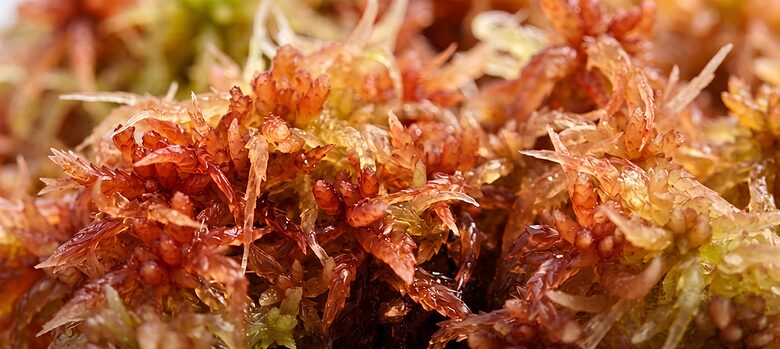
| Colouration | Olive/pale green to ochre, amber, mustard, and honey brown |
| Growth habit | Macroscopic, thick stems with large, turgid capitula |
| Ideal for | Amphibians, Sarracenia, Darlingtonia, and large naturalistic builds |
| Supply format | Live inoculum portion: approx. 6 × 3 cm |
Origin & Structural Hardiness
A member of section Sphagnum (characterised by boat-shaped, cymbiform leaves), this Mount Jiri ecotype evolved under stark seasonal shifts—cold winters followed by humid monsoon summers. This lineage gives it far greater resilience and structural durability than standard tropical mosses.
Morphology & Capillary Water Retention
Unlike fine-textured species, it forms thick cylindrical stems topped with oversized, plump capitula. Its deeply concave leaves create micro-chambers that deliver exceptional capillary water storage. It excels as a living substrate for amphibians, bog carnivores (Sarracenia, Darlingtonia), and large-scale naturalistic enclosures, adding a dense, ancient woodland texture.
Colouration (‘Golden Forest’ Phenotype)
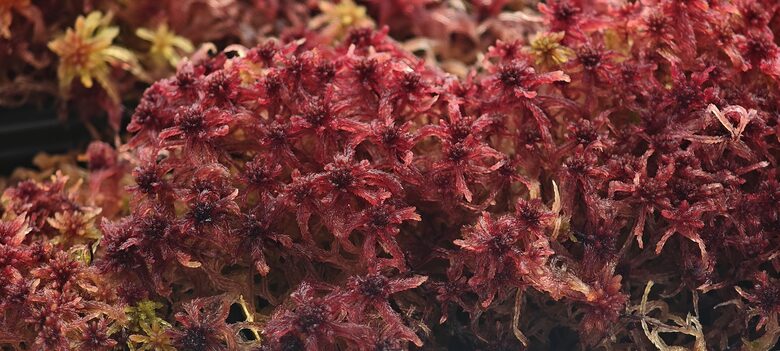
This species does not produce red pigments, instead displaying an understated, natural woodland palette. Under low light it remains pale to olive green; with strong lighting and daily temperature drops, its tips shift into rich tones of ochre, amber, mustard yellow, and honey brown.
Related products